
- Summary
- Choosing an eTMF Platform in 2026
- How We Evaluated the Top eTMF Platforms
- eTMF Platforms Comparison
- A Closer Look at the Top eTMF Platforms
- What to Consider Before Choosing an eTMF Platform
- eTMF Selection Checklist
- Conclusion
- External References
Summary
Choosing an eTMF platform is less about finding the system with the longest feature list and more about finding one that fits how your organization manages clinical trial documentation. The leading platforms in 2026 vary in their approach, from enterprise eClinical ecosystems and specialist eTMF solutions to platforms built around site connectivity or managed TMF services. This guide compares 10 leading options to help sponsors and CROs identify the right fit for their needs.
This guide compares 10 leading eTMF systems for sponsors and CROs, examining where each platform may fit based on TMF capabilities, platform approach, integrations, operational model, scalability, and other selection considerations.
There is no single “best” eTMF for every clinical trial organization. The right choice depends on study complexity, organizational size, existing clinical technology, internal TMF resources, integration requirements, and long-term clinical development strategy.
Choosing an eTMF Platform in 2026
The role of the eTMF has expanded well beyond serving as a simple document repository. Sponsors and CROs need systems that can keep trial documentation organized, maintain a reliable record of study activities, support oversight, and make essential documents accessible when they are needed.
At the same time, eTMF platforms differ considerably in how they approach these requirements. Some are part of broader eClinical ecosystems, while others focus specifically on TMF management or combine technology with managed services. Understanding those differences is important when building an eTMF shortlist.
That is why this comparison looks beyond the number of features a platform offers. The evaluation considers the capabilities that affect how an eTMF performs in real clinical trial environments, from compliance and document management to integration, usability, and scalability.
What Is eTMF in Clinical Trials?
Learn how an electronic trial master file helps clinical teams manage essential documents, version control, inspection readiness, compliance, and study oversight.
How We Evaluated the Top eTMF Platforms
We evaluated each platform against the capabilities that matter most when selecting an eTMF for clinical trial operations. The assessment looks beyond basic document storage to consider how well each platform supports compliance, TMF management, connectivity, security, scalability, and day-to-day usability.
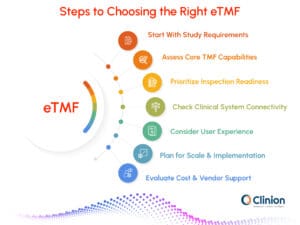
Rather than assigning an overall numerical ranking, this comparison focuses on six major evaluation areas. This is because the relative importance of each criterion varies considerably between sponsors, CROs, study portfolios, and operating models.
Regulatory and Inspection Readiness
We considered capabilities that help organizations maintain complete, traceable, and inspection-ready trial records. This includes audit trails, expected-document management, electronic signatures, quality controls, and support for inspection readiness.
Core eTMF Functionality
The evaluation covers essential TMF capabilities such as document and artifact management, metadata, indexing, version control, taxonomy, filing, and workflow management. Alignment with the TMF Reference Model was also considered where information was publicly available.
Integration and Interoperability
We assessed how well platforms connect with the broader clinical technology environment, including CTMS, EDC, site systems, APIs, SSO, and other enterprise applications.
Security and Compliance
Security and compliance considerations included access controls, data protection, hosting and deployment options, validation support, certifications, and other safeguards relevant to regulated clinical environments.
Vendor Maturity and Scale
We considered each vendor's experience in clinical research, platform maturity, customer and study scale, and ability to support different organizational and trial models.
Usability, Deployment, and Value
The assessment also considered ease of use, implementation approach, deployment flexibility, scalability, vendor support, and publicly available information on pricing or overall value.
Disclaimer: This comparison is based primarily on publicly available information. Platform capabilities, integrations, pricing, and availability may change, and vendor-reported claims were not treated as independently validated unless supporting evidence was available. The platforms are presented in alphabetical order and are not ranked.
eTMF Platforms Comparison
The 10 platforms in this guide take different approaches to eTMF management. Some are part of broader eClinical ecosystems, while others focus specifically on TMF management, site connectivity, or managed services.
The table below is intended as a shortlist-oriented comparison rather than a feature-by-feature ranking. Detailed compliance, security, integration, validation, and pricing requirements should be confirmed directly with each vendor.
eTMF Platform | Best For | TMF / Inspection Readiness | Workflow & QC | Integration / Ecosystem | Key Differentiator |
Clinion eTMF | Sponsors and CROs seeking an integrated eClinical environment | Pre-built DIA structure, real-time tracking, version control and audit trails | Document tracking and lifecycle controls | Part of Clinion’s broader eClinical platform | Unified eClinical approach that keeps TMF closer to other clinical trial workflows |
Ennov eTMF | Organizations needing configurable TMF plus regulated-content management | TMF Reference Model-ready configuration, dashboards and inspection-focused reporting | Risk-based sampled QC, electronic signatures, Smart Templates and guided document planning | Can operate with Ennov CTMS or integrate with another CTMS | Combines eTMF with broader quality/regulatory content management and configurable deployment |
Florence eTMF | Sponsors/CROs with site-intensive or decentralized studies | Inspection-readiness positioning with visibility into sponsor/site documentation | Site document exchange and end-to-end document workflows | Direct eTMF-to-eISF connectivity through Florence SiteLink | Strongest emphasis on connecting sponsor TMF directly with site eISF workflows |
IQVIA eTMF | Sponsors wanting technology plus TMF operational expertise | Dashboards covering TMF quality, completeness and timeliness; continuous inspection-readiness focus | Document workflows, QC checks and finalization processes | Connected to IQVIA’s broader technology/services environment | Combines eTMF software, TMF expertise and managed services |
Medidata eTMF | Organizations already using Medidata/Rave clinical systems | Real-time completeness, timeliness and quality reporting | Automated workflows, intelligent placeholders and auto-filing | Documents and metadata can populate from Rave and Medidata CTMS workflows | Deep connection between TMF and operational activity within Medidata’s ecosystem |
Montrium eTMF Connect | Emerging and midsize sponsors | TMF Reference Model support, completeness dashboards, missing-document monitoring and inspector access | Configurable workflows, batch indexing, QC and document-query workflows | Native Microsoft 365/Office integration plus collaboration options | Purpose-built eTMF with relatively flexible deployment and strong automation for scaling teams |
Oracle Life Sciences eTMF | Sponsors/CROs in the Oracle Life Sciences ecosystem | Cloud eTMF designed around maintaining essential documents and inspection readiness | Shared artifact/file/workflow lifecycle with study-startup processes | Built on the same platform as Oracle Site Activate | Particularly strong fit where Oracle Site Activate is already used |
PhlexTMF | Organizations wanting specialist TMF technology and services | TMF Reference Model structure, completeness reporting, inspection support and dedicated TMF expertise | QC, query management and purpose-built TMF workflows | Purpose-built eTMF rather than broad eClinical suite | Dedicated TMF specialization plus managed-service options and embedded TMF expertise |
Trial Interactive | CROs and sponsors managing complex/global studies | Inspection-readiness positioning and TMF services | Document management, quality-focused workflows and connected content-management processes | Part of a broader platform spanning eTMF, CTMS, LMS and content management | Operationally focused eClinical platform with strong TMF + CTMS + services combination |
Veeva Vault eTMF | Large/global sponsors and CROs | Active TMF model, TMF Reference Model support, Expected Document Lists and real-time completeness reporting | Risk-based document QC, document quality workflows, timeliness tracking and TMF transfer | Integrated with the broader Veeva Clinical Operations ecosystem | Highly mature enterprise TMF capabilities within a broad clinical operations ecosystem |
A Closer Look at the Top eTMF Platforms
Below is a closer look at each eTMF platform, including its core capabilities, ideal use cases, key differentiators, and considerations for sponsors and CROs.
Clinion eTMF
Best for: Sponsors and CROs looking for eTMF capabilities within a unified eClinical platform.
Clinion eTMF is part of Clinion’s unified eClinical platform, bringing trial master file management into the broader clinical trial environment. It is designed to help teams organize essential documents, track their status, maintain document history, and support oversight throughout the study lifecycle.
Key Features
- Pre-built DIA TMF structure: Provides a structured framework for organizing trial documents and artifacts.
- Real-time document tracking: Enables teams to monitor document status and maintain visibility across the TMF.
- Version control and audit trails: Maintains document history and activity records to support traceability.
- Integrated eClinical workflows: Connects eTMF with other clinical trial capabilities within the Clinion platform.
What Sets It Apart
Clinion approaches eTMF as part of a connected clinical environment rather than as a standalone document repository. This can help organizations looking to bring TMF management closer to other clinical trial workflows and reduce the need to work across disconnected systems.
Considerations
Organizations evaluating Clinion should assess how its integrated platform approach fits with their existing clinical systems, TMF processes, and study operating model.
Ennov eTMF
Best for: Organizations seeking a configurable eTMF alongside broader quality and regulatory processes.
Ennov eTMF is part of Ennov’s broader suite of solutions for regulated content and information management. Its eTMF capabilities are designed to support the organization, tracking, review, and management of clinical trial documentation while connecting with related quality and regulatory processes.
Key Features
- Configurable TMF structure: Supports different document structures, metadata, and organizational requirements.
- Document and artifact management: Enables teams to manage, classify, track, and retrieve essential trial documentation.
- Workflow management: Supports document review, approval, filing, and related TMF workflows.
- Quality and regulatory connectivity: Can connect TMF processes with broader quality and regulatory management activities.
What Sets It Apart
Ennov’s broader regulated-content ecosystem is a key differentiator for organizations that want TMF management to work alongside quality and regulatory processes rather than as an isolated application.
Considerations
Buyers should assess the level of configuration required and whether the wider Ennov ecosystem aligns with their existing technology and operating processes.
Florence eTMF
Best for: Sponsors and CROs managing site-intensive or decentralized clinical trials.
Florence combines eTMF capabilities with technology focused on connecting sponsors, CROs, and research sites. Its approach is particularly relevant when site documentation and document exchange form a significant part of trial operations.
Key Features
- eTMF and eISF connectivity: Connects sponsor-side TMF management with site-level documentation.
- Document exchange: Supports the exchange and management of trial documents between study stakeholders.
- Site-focused workflows: Facilitates document processes involving research sites.
- Centralized visibility: Helps teams maintain oversight of documentation across participating sites and stakeholders.
What Sets It Apart
Florence places strong emphasis on the connection between sponsor and site documentation. This can be particularly useful for studies where managing documents across multiple sites is a significant operational challenge.
Considerations
Organizations should evaluate how Florence’s site connectivity model fits with their existing site workflows and broader clinical technology environment.
IQVIA eTMF
Best for: Sponsors seeking eTMF technology alongside TMF expertise and clinical research services.
IQVIA combines eTMF technology with its broader clinical research capabilities and TMF services. This gives organizations the option to use an eTMF platform alongside operational and consulting support across different stages of the clinical trial lifecycle.
Key Features
- Centralized TMF management: Supports the organization and management of essential trial documentation.
- TMF services: Combines technology with TMF-related operational and consulting expertise.
- Workflow and oversight: Supports document workflows and visibility across study activities.
- Clinical ecosystem connectivity: Fits within IQVIA’s wider clinical research technology and services environment.
What Sets It Apart
The combination of eTMF technology with clinical research and TMF services distinguishes IQVIA from vendors focused primarily on software. This can appeal to organizations looking for technology and operational expertise from the same provider.
Considerations
Organizations should determine whether the additional services are relevant to their operating model and assess how the eTMF offering fits with their existing technology environment.
Medidata eTMF
Best for: Organizations already using or planning to use the Medidata clinical technology ecosystem.
Medidata eTMF is designed to connect TMF management with the broader Medidata clinical trial environment. Its positioning makes it particularly relevant for organizations seeking greater connectivity between TMF activities and other clinical operations.
Key Features
- Centralized eTMF management: Supports the organization and management of essential trial documents.
- Medidata ecosystem integration: Connects eTMF processes with other Medidata clinical applications.
- Document workflows: Supports review, approval, filing, and document lifecycle processes.
- Study-level visibility: Helps teams monitor documentation and related clinical activities within a connected environment.
What Sets It Apart
Its integration with the broader Medidata ecosystem is a central differentiator. Organizations already using Medidata solutions may benefit from keeping TMF processes within the same clinical technology environment.
Considerations
The platform should be evaluated in the context of the organization’s broader technology stack, particularly where clinical systems from multiple vendors need to work together.
Montrium eTMF Connect
Best for: Emerging and midsize sponsors looking for a purpose-built eTMF platform with flexible deployment options.
Montrium eTMF Connect is designed specifically for managing clinical trial documentation and TMF processes. The platform focuses on providing a structured environment for document management while allowing organizations to adapt the system to their operational requirements.
Key Features
- TMF document management: Supports the organization, classification, filing, and retrieval of essential trial documents.
- Configurable workflows: Allows teams to configure document processes around their study and organizational requirements.
- TMF oversight: Provides visibility into document status and TMF activities across studies.
- Flexible deployment: Offers deployment and packaging options designed to accommodate different organizational needs.
What Sets It Apart
Montrium's focus on TMF management and flexible packaging can make it an option for organizations that want a dedicated eTMF without the broader complexity of a large enterprise clinical platform.
Considerations
Organizations should evaluate the platform's integration capabilities, scalability, and configuration requirements against their existing clinical technology environment.
Oracle Life Sciences eTMF
Best for: Organizations looking for eTMF capabilities within a broader enterprise clinical technology ecosystem.
Oracle Life Sciences eTMF provides electronic trial master file capabilities within Oracle's broader life sciences portfolio. Its positioning makes it relevant for organizations that want to connect TMF management with other clinical trial and enterprise processes.
Key Features
- Centralized TMF management: Supports the organization and management of essential trial documentation.
- Document workflows: Enables controlled processes for document review, approval, and filing.
- Clinical system integration: Connects eTMF processes with other Oracle Life Sciences technologies.
- Enterprise security: Supports controlled access and security requirements for regulated clinical environments.
What Sets It Apart
Oracle's broader enterprise technology ecosystem is the platform's main differentiator. Organizations already using Oracle Life Sciences solutions may find value in connecting TMF management with their existing clinical infrastructure.
Considerations
Buyers should assess how well the Oracle ecosystem fits their current technology landscape and whether the platform's enterprise capabilities match the scale and complexity of their studies.
PhlexTMF
Best for: CROs and organizations looking for specialist TMF technology combined with managed services.
PhlexTMF is focused specifically on clinical trial master file management, combining eTMF technology with TMF services. Its approach is designed to support organizations that want specialized TMF expertise alongside the technology used to manage their trial documentation.
Key Features
- Purpose-built eTMF: Provides dedicated capabilities for managing clinical trial documentation and artifacts.
- TMF services: Combines the platform with specialist TMF operational support.
- Document workflows and oversight: Supports filing, review, tracking, and ongoing TMF management.
- Quality and compliance support: Provides capabilities designed to support controlled and inspection-ready TMF processes.
What Sets It Apart
PhlexTMF's specialist focus on TMF management, combined with managed services, distinguishes it from broader eClinical platforms. This can be useful for organizations that want to supplement internal TMF resources with external expertise.
Considerations
Organizations should evaluate whether a managed-services model fits their operating strategy and determine which TMF activities they want to retain internally.
Trial Interactive
Best for: CROs and sponsors managing complex or global clinical studies.
Trial Interactive provides eTMF capabilities designed around clinical trial document management and operational workflows. The platform places emphasis on workflow automation, document oversight, and quality management across complex study environments.
Key Features
- TMF document management: Supports the controlled management and organization of essential trial documents.
- Workflow automation: Automates document review, approval, filing, and related processes.
- Risk-based quality controls: Supports quality review approaches designed around identified TMF risks.
- Mobile capabilities: Enables users to access and manage relevant TMF activities across different working environments.
What Sets It Apart
The combination of workflow automation, mobile access, and risk-based quality controls gives Trial Interactive a strong operational focus. This can be particularly relevant for CROs and organizations managing complex, geographically distributed studies.
Considerations
Organizations should assess the platform against their study workflows, integration requirements, and preferred approach to TMF quality management.
Veeva Vault eTMF
Best for: Large and global sponsors seeking enterprise-scale TMF management.
Veeva Vault eTMF is part of the broader Veeva Vault platform and is designed to support TMF management across clinical development programs. Its enterprise positioning makes it particularly relevant for organizations managing large study portfolios and complex global operations.
Key Features
- Active TMF management: Supports ongoing document collection, filing, tracking, and oversight throughout the study.
- TMF Reference Model alignment: Provides a structured approach to organizing trial documentation and artifacts.
- Workflow and document control: Supports controlled review, approval, filing, and document lifecycle management.
- Clinical ecosystem integration: Connects TMF activities with other Veeva Vault applications and clinical workflows.
What Sets It Apart
Veeva's scale and broader clinical ecosystem are major differentiators. For large organizations already using Veeva applications, the ability to connect TMF management with other clinical development processes can reduce fragmentation across the technology landscape.
Considerations
Organizations should consider implementation complexity, existing Veeva adoption, integration requirements, and the level of functionality needed for their specific study portfolio.
What to Consider Before Choosing an eTMF Platform
Once you have a shortlist, evaluate how well each platform fits your study requirements, existing systems, and long-term needs.
A structured selection process can help prevent organizations from choosing an eTMF based primarily on brand recognition or feature volume rather than operational fit.
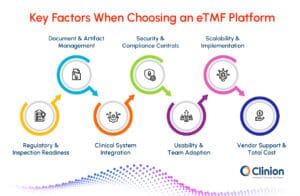
Define Your eTMF Requirements
Consider your study volume, document types, users, geographic scope, and operating model. This helps separate essential capabilities from features you may not need.
Evaluate Core eTMF Capabilities
Assess document and artifact management, metadata, taxonomy, version control, filing, search, and workflows. The platform should support your TMF processes without adding unnecessary manual work.
Assess Compliance and Inspection Readiness
Look for audit trails, electronic signatures, access controls, document history, quality controls, and reporting that support traceability and inspection readiness.
Consider Integration Requirements
Evaluate how the eTMF connects with CTMS, EDC, eISF, site systems, and other clinical applications. APIs, SSO, and integration options can be important depending on your existing technology environment.
Evaluate Usability and Adoption
Consider how easily users can navigate the platform, file and retrieve documents, complete workflows, and access the information they need. Training and role-based access should also be evaluated.
Consider Scalability and Implementation
Assess whether the platform can support growing study volumes, users, and regions. Also consider implementation, migration, configuration, validation, and ongoing administration requirements.
Compare Vendor Support and Total Cost
Look beyond licensing costs to consider implementation, training, integrations, support, upgrades, and administration. Vendor experience and ongoing support can also affect the platform's overall value.
eTMF Selection Checklist
Before selecting an eTMF vendor, use these 10 questions to structure your evaluation:
How does the system support TMF completeness, quality, and ongoing inspection readiness?
Does the platform support the TMF structure, document types, metadata, taxonomy, and version control we require?
Does it provide appropriate audit trails, electronic signatures, document history, and role-based access controls?
How efficiently does it support document filing, review, approval, QC, and other TMF workflows?
Can it integrate with our CTMS, EDC, eISF, site systems, and other clinical applications?
What APIs, SSO, and other interoperability options are available?
What is involved in configuration, validation, implementation, and migration from our existing TMF?
Can the platform scale across increasing studies, sites, countries, users, and document volumes?
What training, technical support, and ongoing administration will be required after go-live?
What is the total cost of ownership, including licensing, implementation, migration, integrations, support, and administration?
Use these questions during vendor demonstrations and RFP evaluations so competing eTMF systems can be assessed against consistent criteria.
Conclusion
Selecting an eTMF platform is ultimately about finding the right fit, not simply choosing the platform with the most capabilities. The right solution should support your TMF processes, integrate with the systems your teams already use, and provide the compliance, visibility, and scalability needed as your clinical portfolio grows.
The platforms covered in this guide represent different approaches to eTMF management. Use the comparison as a starting point, then evaluate shortlisted platforms against your specific study requirements, workflows, technology environment, and long-term needs.
Keep trial documents inspection-ready with Clinion eTMF
Clinion eTMF helps clinical teams manage essential trial documents, version control, workflows, audit trails, access permissions, completeness tracking, and inspection readiness from one secure electronic trial master file.
External References